Wildlife Help
Your health is most important. Please stop and think before you act! Always make sure a baby animal really is orphaned. Be careful when helping - use caution and wear gloves. Do not get bit (yes, babies can have teeth). Move all babies out of direct sunlight. And don’t forget to wash your hands!
Wildlife rehabilitators are licensed by the Michigan Department of Natural Resources to possess wildlife that is orphaned, injured, sick, or in any kind of need. It is illegal to possess wildlife in Michigan without a permit from the DNR. The majority of us do this out of our homes and pay for the care of these animals ourselves, including veterinary care. Too often we get calls about animals that have been what we call "kidnapped" by well-meaning people who are uninformed about the natural behavior of certain species. We are hoping that this website will help wild babies remain where they should so that we can focus our efforts and limited resources towards those who are truly in need. If you are not sure whether a wild animal needs help, please call us for advice unless it is in obvious distress or danger. Refer to our tab for the DNR website to locate a wildlife rehabilitator and to our section for help advice for each species.
THE BASICS:
1. DO NOT FEED!
2. DO provide supplemental warmth as explained below.
3. DO provide hydration as explained below.
4. Call a licensed wildlife rehabilitator. The rehabilitator will direct you to a veterinarian that treats wildlife if the animal needs immediate veterinary treatment.
5. Wildlife DOES NOT abandon babies that have been handled by humans. They just lick off our scent.
SPECIFIC SPECIES INFORMATION:
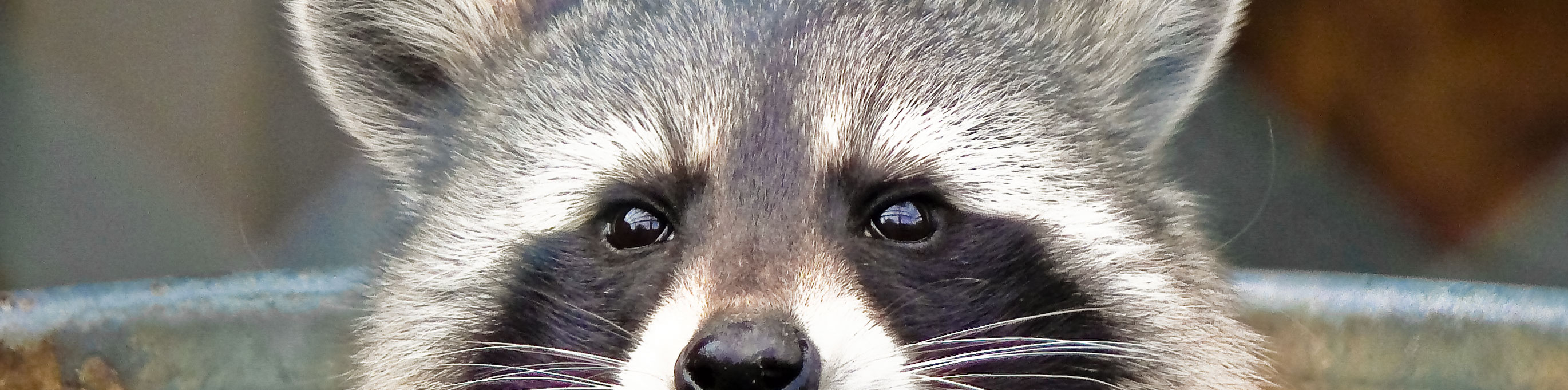
Raccoons: If a mother raccoon has entered your attic or chimney she intends on making a nest and having her babies there. Please don't trap and remove her then ask us to take the babies you will hear crying two days later. The unfortunate fact is that there aren’t enough of us to take in all the baby raccoons who need help. If we take them from people’s chimneys and attics, we won’t have room for the ones who are sitting on their dead Mom at the side of the road. There are two options: Let her finish raising her babies. When they leave in the summer block up the attic access using hardware cloth or put on a chimney cap. Or you can use a light bulb and/or loud radio in the attic or chimney. You will make it uncomfortable for her so that she will take the babies somewhere else. This works best when the babies are a few weeks old because a mother raccoon often moves her babies to different places anyway. She knows her territory and can take them to an alternate den - out of your house. A licensed trapper can assist you in doing this, and can block the access hole to the attic or install a chimney cap after Mom moves the babies so you won’t have this problem again. If you trap Mom and release her about a mile away there is a good chance she will return for her babies and move them away from the human interference.

If baby raccoons are crying and approach you they need help. If you are walking in the woods and see babies but not their mother, you probably scared off the mother. Unless there is some obvious problem with the babies (bleeding, lethargy), they are fine. Mother raccoons will be out during the day to eat because they are hungry.
As of the date of this posting, we don't have raccoon strain rabies in Michigan. So far Ohio has stopped it at their eastern counties.
Some untrained people have used pet nurser bottles to feed raccoons. These are too small and will contribute to the baby starving to death.
If you have found an injured raccoon, it must be contained before you call for help. If it is not, it may crawl off where you can’t find it or go into the street and be hit by a car. Place a garbage can on its side then use a shovel to put the injured raccoon in the can. You could also use a broom to move the animal into the can. Then gently stand the can on its bottom. Or you can place a large plastic container over the raccoon then gently slide the lid underneath.
*Seeing a raccoon out during the day does NOT denote illness. Insted, it is most likely a mother raccoon who needs the extra calories in order to feed her babies.
Squirrels: They can have two litters a year, one in the spring and one in the late summer. They can be blown out of nests in higher winds. Most people know where the squirrel nests are in their yards. You can reunite the babies with their mother by nailing a box about five feet up on the nest tree or on a nearby tree. This is a comfortable height for you to reach, and the babies are off the ground and safe from predators. A baby animal's nest is very warm so while waiting for their mother to retrieve them, the babies will need a heat source. You can pour uncooked rice into a sock, tie the sock off, and heat it in your microwave for a minute and a half. This will hold heat for an hour or two. Put the warm sock in the box, cover it with a t-shirt, then put the babies on top of that and cover them with a cloth. Don't use towels as their nails can get caught in the loops. Then simply leave the area but do check the heat source occasionally and reheat the sock if necessary. If you do this in the morning and they are still there in the late afternoon, call a wildlife rehabilitator.

Truly orphaned squirrel behaviors include extreme “friendliness” in eyes-open babies (think of the children’s story, “Are You My Mother?”), and crying (calling) for an extended period of time. No matter their age, however, if something happens to their mother and she does not return, all squirrel babies will and do go looking for her. Even hairless, eyes-closed infants will blindly make their way out of the nest, and because they are entirely unsuited for such activity, end up on the ground.
Fawns: Fawns don’t have a scent for the first few weeks. Their mother feeds them two or three times a day, cleans them, then leaves but is
always watching nearby to act as a decoy to distract a predator. A dog, coyote, or person can walk right by a fawn in the woods and not know it's there unless it moves. They are very good at not doing that. Usually there are twins about 50 feet apart. If a fawn follows you and is crying or is laying on its side it is in trouble. For the most part, we can’t treat adult deer. They die from the stress of being handled by humans. A deer can survive on three legs. It needs to be able to get up and run from you. However, you need to watch carefully and make sure that there aren’t two legs injured. In that case, the deer will have to be euthanized.
Rabbits: Rabbits can have six litters a year and often will use the same nest. She feeds the babies only at dawn and at dusk, then leaves. Baby rabbits, like fawns, don't have a scent. The only way a cat or dog knows a nest is there is if they step on it and the babies squeak. They are in the nest only three weeks so when they leave they may be no bigger than a golf ball. They will hang around with their mother for a short time. Some rabbit nests are only a small scoop in the ground, and others you can put your whole hand into. If you discover a rabbit nest in your yard and you have pets, you can put a laundry basket or a milk crate upside down over the nest during daylight hours, and if necessary, you can weigh it down with a rock. Remove this cover before dark and then replace it after dawn until the babies have left.

Please understand that we can’t take in baby rabbits just because you have a dog, cat, hawk, lawnmower or car in the area where the mother rabbit has chosen to make her nest. We have those dangers at our homes, too. Rabbits die easily from the stress of being around people, even in the hands of someone experienced. Their gut pH and blood sugar changes and is difficult to replicate, as is the mother’s milk. They have the best chance of survival by being with their mother in your yard for those first 3 weeks.
Opossums: Opossums are North America’s only marsupial and that means the mothers carry their babies in a pouch. When a mother opossum is hit by a car her babies may be stuck in the pouch, where they will starve and dehydrate to death or become septic from clinging to their dead mother’s nipple. It is imperative that these babies are taken out of the mother’s pouch and receive emergency treatment as soon as possible. The nipple is like a long piece of spaghetti that stays down the babies’ throats. They don’t nurse like other mammals. You must take care when removing the babies from the nipple as you can damage them by pulling them off too quickly instead of gently.

When the babies are old enough to leave the pouch, they cling to their mother’s back. They fall off and she doesn’t know it. This is one mammal that does not come back and collect its babies. By this time, however, they actually are capable of feeding themselves but their small size makes them easy prey for other animals. If you see a ‘possum under 6” long, not including the tail, it should go to a wildlife rehabilitator. Although they normally don’t bite when that small, they do have sharp teeth so be careful when handling them.
Birds:
Birds: Baby birds fall out or blow out of nests. If you can find the nest, return the baby. If you can’t find the nest, remember the baby didn’t fall far from it. Make a nest from a plastic basket from cherry tomatoes. Fill the nest with dry bedding such as dead leaves or straw. Or you can use
dryer lint. Do not use pine or cedar shavings. It is imperative to put enough dry bedding in the new nest to keep the baby very snug. Nail the nest to a tree near where you found the baby. It must have leafy cover from sun and predators. Wiring the basket to a nearby bush is better. The parents can take care of two nests at a time. When a bird leaves the nest it flutters to the ground. If you put it back in the tree it will flutter to the ground again. The parents will feed them and protect them as best as they can. This is the time to keep your cat in the house. Birds also make nests in propane fill caps, which workers remove nest and all. Stuff a rag into the cap to prevent this.
dryer lint. Do not use pine or cedar shavings. It is imperative to put enough dry bedding in the new nest to keep the baby very snug. Nail the nest to a tree near where you found the baby. It must have leafy cover from sun and predators. Wiring the basket to a nearby bush is better. The parents can take care of two nests at a time. When a bird leaves the nest it flutters to the ground. If you put it back in the tree it will flutter to the ground again. The parents will feed them and protect them as best as they can. This is the time to keep your cat in the house. Birds also make nests in propane fill caps, which workers remove nest and all. Stuff a rag into the cap to prevent this. COYOTES AND FOX:
Coyotes and fox mate for life. The family and social structure is highly organized. The puppies (coyotes) and kits (fox) don't leave the den until they are weaned. After that, they may wander away from the den while the parents are out hunting. They won't be far from the den. Also, Mom may have dropped a baby while moving to an alternate den if she is scared off. It is sometimes difficult even for someone experienced to tell the difference between a coyote pup, red fox kit, or gray fox kit, especially when very young. If you are unsure if this is an orphaned baby, stay way back and watch for a few hours. Sometimes mushroom hunters or other outdoor people come across healthy babies that are exploring and kidnap them, thinking that if the parent isn't right there the babies are orphaned. If both parents are dead, which is highly unlikely, the young will come out looking for food. Sometimes in a flooding area a baby may be washed out of a den. Leave the baby alone unless it is constantly crying, dirty, maggot or flea infested, bloody, or injured.

In the wild, coyotes are timid animals. In your home, they DO NOT make good pets. They WILL bite the people that are taking care of them. They want to establish a pack hierarchy. There is no place in the wild or in a home for a coyote that is habituated to people. As coyotes are all over North and Central America, any zoo or nature center that wants one has one. If you try to make a pet out of a coyote that you will find you cannot keep, it cannot be released. It will have to be euthanized. ADDITIONAL INFORMATION:
Baby mammals must be kept warm. Most cannot thermoregulate until they near weaning. If you find that you must take in a relatively healthy-appearing baby mammal, even for a couple of hours before transporting it to a licensed wildlife rehabilitator, the first thing you must do is get it somewhere safe, warm, and quiet. For heat you can pour rice into a sock and tie off the sock. Heat that in the microwave for a minute and a half. Or you can put hot water into a soda pop or water bottle in a sock. It is important that the baby be able to move away from the heat source. For smaller mammal species, a secure box small enough to act as a nest lined with paper towel or tissue is all that’s needed. Or a smaller cat carrier will do with a small box inside it. For larger mammal species, use a larger box or pet carrier with t-shirts on the bottom. Put air holes in the box before you put the baby inside. Place the container in a room away from all household activity, especially any domestic pets, to keep the baby calm and to prevent the possible transmission of parasites or disease. Fleas, ticks, distemper, and mange are all potential though very unwelcome guests. Do not forget to continue to provide supplemental heat during transport to a licensed wildlife rehabilitator. Make sure the box lid is securely closed. DO NOT USE TAPE TO SECURE THE LID!! The noise made removing the tape is very scary to an already scared baby.
Baby mammals need hydration:
If you are unable to get the baby to a vet or wildlife rehabilitator immediately, you must begin to hydrate it. Almost every single orphaned wild baby mammal will be suffering from dehydration and starvation. If this is to a severe enough degree this causes a condition called “necrotic bowel syndrome”. In simple terms, the blood is diverted from the digestive tract in order to preserve more vital organs such as the heart and lungs. If this condition continues for too long, parts of the bowel will begin to die. If you put food into a baby with dieing bowels, you will end up with a dead baby. After the baby has regained body warmth, offer it only Pedialyte or water to which you’ve added the tiniest pinch of sugar and salt. Don’t force the baby to take it. If it is too frightened or in shock it will need some time, perhaps several hours, to calm down. Just check on it at regular intervals and continue to offer it the fluid. A sterilized eyedropper or small “worming” type syringe are fine to use. Just be sure to not overfill the baby’s tummy or give it more than a drop or two per swallow for a small mammal. Larger mammals can drink a full eye dropper or more. Do not use a pet nursing bottle for a baby squirrel. They aspirate very easily, causing pneumonia and eventually death. Depending on the size of the baby, restoring proper hydration can take several days.

Mange: If you see a wild mammal with patches of missing hair, especially if its eyes are squinting, the animal has mange. It is usually fatal. In the winter the animal can freeze to death. Mange can be spread to your pets and you. It is easy to treat with the right medication. Do not hesitate to call a wildlife rehabilitator as it is crucial to treat the wild animal as soon as possible.
Wild baby mammals cannot digest cow’s milk:
Never, ever give a wild baby cow’s milk. Most species cannot digest it and you can cause the animal severe gastric upset resulting in fatal diarrhea and dehydration. This is a painful and messy death which is easily prevented. Think of it this way: we can live a long time without food, but we cannot live for long without water. Temporary emergency care requires only that you provide hydration and warmth. Anything needed beyond this point should be done by or only under the direct instruction of a licensed wildlife rehabilitator familiar with the species.
NOTE: Please use extreme caution if you find an injured skunk or a bat. Skunks and bats are the most common rabies carriers in Michigan and wildlife rehabilitators may not, by law, accept them. If you need to transport one to a veterinarian for humane euthanasia, wear heavy gloves and a jacket and secure the animal well to avoid being bitten or scratched. Use extreme caution around birds of prey such as hawks and owls. Their claws and beak can inflict serious damage.
Last Updated ( Wednesday, 20 January 2010 10:55 )
List of Michigan Wildlife rehabilitators: http://www.michigandnr.com/dlr/ |